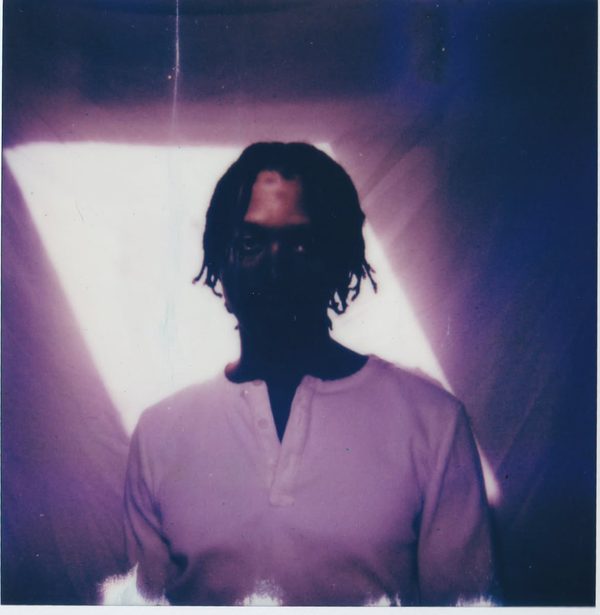
Circa March or April 2026, Pink iPod discovers Sofia by Beastie. I'm immediately drawn in by its fog, its loops, and unbeatable production. There are a few markers on the Pink iPod enjoyment scale that showed just how hard his EP of three singles hit me:
Last item on the scale: a burning determination to figure out how this guy from Mitcham made Hellscraper. So when he posted that he was in Paris, I asked if he fancied meeting under the heavy air of our second heatwave.
What will strike you in this interview is how far along Beastie already is in the way he thinks about his music. He's not good at much else, he told me. The "pretty songs" are behind him; gorgeous tracks that served their purpose but never quite touched his core. Now he wants to talk about place, about his grandma. He just released Mitcham Mint, an homage to a home he once barely cared for and where he has since affirmed his roots, soon to sit on his next EP, Maria. He refuses to be an artist from nowhere; he wants you to hear his accent, to hear the UK. He turned down the record deals that didn't fit his vision. Welcome to the world of Beastie: ballet, talented collaborators, Solange, lost pubs, fashion, photography, and passion.
Beastie has claimed in his videos that he will be the first artist from Mitcham to win a Grammy. This interview is, first and foremost, a gesture to my future self: I know I was there to see it all brewing.
Congratulations, now you know Beastie.
PINK IPOD: My first question is the same question I ask everyone. What's the first song you remember composing or playing?
BEASTIE: I have a very vague memory. I got my music software for the first time when I was 14, probably. And I made a really, really, awful four bar loop of bad chords, really cheesy synths. And I remember making it and going downstairs and showing it to my sister, like "oh my god, listen to what I made, isn't it really cool?" That's the first time I was like, oh my god, I made something. Also in my music class in secondary school, we had to make a song for our final assignment. So I wrote the lyrics and played the piano for this one song, then I got other people to perform it. And it was called Only You, and it was terrible. Yeah, that would be the one, probably Only You.
PINK IPOD: When you think about listening to music as a child, what kind of music were you listening to, and do you remember where you were listening to it?
BEASTIE: Yeah. They were playing a lot of soul music, a lot of jazz, and R & B. I'm from Trinidad, my family is, so there's a lot of soca and reggae around me. I've always been around music. I first started to really develop my own relationship to music when my brother would play me American hip hop. It must've been 2006, 2007. So Lil Wayne was big, Kanye West was big, Jay Z was big, Eminem was big. My brother would just make me listen to their music. My parents didn't really approve. I remember once, I was playing an album that my brother gave to me, and my mum shouted at me. She said, "why are you playing this?", because he was swearing all along. I told her "I'm not listening to the bad words!". When I got my first MP3 player and I could put my own music on there, I was putting the Kanyes, Lil Waynes, and also the High School Musical soundtrack and stuff like that. That's when I was like, okay, cool. I have my own attachment to this music, and it means something to me.
PINK IPOD: You mentioned being from the UK and being from Mitcham a lot. I was wondering how much that place means to you, but specifically how it has influenced your musical project ?
BEASTIE: Yeah. It's funny because I feel like I've only recently started to vocally put my Mitcham and where I'm from out there. When I first started releasing music, I was just saying I'm from South London. Because Mitcham is kind of in the middle of nowhere. Even people in London, if you tell them that you're from Mitcham, they won't know where it is. When I was growing up, I didn't really feel attached to the area. I kinda wanted a lot more. And when I was able to go into the centre of the city and leave, when I had money and I didn't have to be there anymore, I took that chance and I did. My friends that I grew up with from there were into different stuff than me. I always felt a bit outcasted there. But it wasn't until a year or so ago that I was back home, just enjoying the area that I'm from. It's a lot of greenery and a lot of quietness. Also so many memories that I didn't realise were so formative for me. And I was thinking, feeling like an outcast and a black sheep is also kind of the essence of the area itself, because it is just an outcasted area that no one knows about. There's a real superpower in embracing that. I think in my music, I try to embrace the fact that I'm not trying to be like other people, which goes hand in hand with the area. And it clicked in there. I was like, hey, no, I am really proud of where I came from. And even the music I'm making isn't stereotypically something that people are used to hearing coming out of the area. And that makes it even better.
PINK IPOD: I feel like that's also why there's an introspectiveness to your music. I also grew up in a very small suburban town, in the Alps. And I feel like the sort of meditative inwardness in your sound which is a sound from suburbia in a way.
BEASTIE: It really is. Because Mitcham can be pretty rough, but there's a really strange quiet. You can literally sit on your balcony and not hear any traffic, not hear any speaking. There's a lot of wildlife. You just hear the rustling of the trees and the wind. It's meditative.
PINK IPOD: I wanna start diving into your music, and I want to start with your writing. When I was listening to your songs, I noticed that a lot of your writing was written with a second person pronoun, a "you". Are you writing to someone? Is it a bunch of unsaid things?
BEASTIE: My writing process is very abstract. First off, I always make the music because I produce it, so the instrumental by itself. Then I take it away and I listen to it on headphones. And then I get the melody going. And when I have the melody down, in that melody I can kind of hear words, and then I know where it's gonna take me and what I wanna say. I feel like I enjoy it more as if I'm talking to myself. Especially the new songs that are coming out, a lot of it is this bigger me, talking and looking at me, looking inwards. I haven't really written many songs that are about one specific thing. It's kind of like a brainstorm thing where there's a central idea. Like, I got a song called Mitcham Mint that I'm gonna drop soon. Because there was an old pub in Mitcham called the Mitcham Mint that got shut down because it got really rough and rowdy, and police got called in. I always knew I wanted that title. And I had so many different songs I was making where I was like, could this be Mitcham Mint? What is Mitcham Mint even about? Could it be about me being from Mitcham and being a star, and that's kinda the Mitcham Mint, he's a star? And I landed on something, and I thought to have a kind of back and forth conversation with it. It feels like the area personified, speaking to me about the hardships that I feel coming from a small town and feeling like I wanna break free. You know what I mean? I think having that dialogue is way more interesting than making a song about, I don't know, a girl, and then calling her Mitcham Mint.
PINK IPOD: Your music is obviously very production focused. And it feels like the lyrics, the singing, were kind of a continuation of the production in many ways. On your single Does It Still Rain, I felt like you put your voice a little bit more forward than you used to. Did you feel comfortable doing that?
BEASTIE: It's interesting you picked up on it, because consciously, when I first started making music, I thought I'm gonna make the production as good as possible. Because I wasn't typically a singer, I was like, I'm not gonna have my vocal be the main thing. When I made Does It Still Rain? I wanted to do something different. I don't wanna just be a vibey artist. All my favourite artists have something to say, whether it's in an abstract way. And I felt like I was shying away from that originally, that was needed in the moment, I guess, for me to get my foot in the door. But to progress, I needed to go out of my comfort zone. And also, I had something to say. That's probably the longest song I've worked on. I think I started that song before Sofia came out. You can't just hide behind the beat on this one. I'm loving that kind of progression, and I'm excited for the new music because I'm just gonna lean more into that and see where it goes.
PINK IPOD: So we know you're from South London, specifically from Mitcham. You sample grime, and obviously you're incorporated in that UK, South London scene. As much as you can hear that UK tone in your music, I feel like the abstractiveness of your lyrics and your production... I'm not surprised you listen to a lot of US rap, because sometimes I could feel like your music is from California. Is that something that you've heard as well?
BEASTIE: Yeah, definitely. That's also why on Does It Still Rain? I made a point to have my accent in it, and be a lot more present in where I'm from. Because I do appreciate the fact that people feel like my music exists in its own world. It's really important to be genuine in who I am. I wanna be an artist that's from the UK, representing Mitcham. But yeah, I have heard that quite often.
PINK IPOD: I really love Hellscraper. And I couldn't place whether it was the first time that you really experimented with maybe more acoustic, just guitar and voice. What was the concept for the song? What made you think that the song needed that?
BEASTIE: That whole EP was... I wanted to experiment in just being as vulnerable as I could. My music prior was cool, but it wasn't personal. So on Hellscraper, I was trying to tap into my relationship with my grandmother, who had just passed away. When she passed, I was really upset about the fact that we didn't talk as much as we could have. She was from Trinidad, and she lived out there. She was pretty old, so when we would talk, it would be hard for her to really speak or hear me. And also, I lost my father not long before that, and it was the same situation. I'd seen him in really, really low periods of his life, and it was difficult seeing him at that. And that's why it was called Hellscraper, because you're stuck touching the bottom of the barrel, you're at rock bottom. And because it was about such vulnerable shit, I wanted to make it as a send off. At that point I didn't care what the song did. I wanted to get it out of myself, because I wanted to say that to my grandmother, to my dad. And I wanted to lean into that, be more vocal, be more singer-songwriter. That's one of my favourites I've made, I think.
PINK IPOD: Can you tell me a little bit about the EP that you're gonna release?
BEASTIE: It's really hard. I'm really happy with it. The whole EP is about growing up in Mitcham. So it's called Maria, because it's like Mitcham personified, Maria Mitcham. And I also wanted to have a follow through from Sofia to Maria. I felt like Sofia was about my mental state for the year leading up to it, going more into myself and being way more vulnerable. For the next step, I wanted to talk about my upbringing. I always remember this quote from Frank Ocean, after he made channel ORANGE. He was talking to one of his friends, and he was like, I don't really know what my next album should be about. Because I've made money, I'm doing that, I don't know what it should be about. And his friend was like, just do it about your home. Do it about when you were growing up, do it about your area, and it's real. It's helped me find a love for where I'm from, and it's also helped me affirm myself and make more of a name for myself in the scene. I recently put out a song from the EP called Too Many Days I've Spent Waiting. It's about feeling like you've been cast aside by the powers that be. It's like, too many days I've spent waiting. That kind of desperation. But then there's a really cool B switch. I always wanna show dark with the light. So even in that struggle, there is optimism and there is beauty, in this really cool B switch that I really love. And I worked on it with my friend Miles Valentine and this guy called Fred Wave, who's a rapper out here in the UK. That was probably the quickest song that we made for the EP.
PINK IPOD: Well, I definitely wanna talk about your collaborators just right after. How was the process of making the EP? Was it quick? Was it a long time coming? And also, did you finance it with the NextGen music fund from Youth Music?
BEASTIE: Yeah. It definitely took a lot longer than I thought it would. After Sofia came out, I was a bit lost. Because Sofia's been doing well recently, but when it came out, I liked the songs, but I wasn't seeing the reception. When I dropped music before, I felt like, okay, cool, it's being received, and this is a step up in my career. And when I dropped Sofia, it was an amazing release, but I was like, oh damn, I'm really just in the same place. Me and my manager at the time separated. I had no prospects on the line aside from this Youth Music grant. And the people at Youth Music really helped me mentally get back in the realm of, let's make something really cool. The grant money helped me fund this project, get session musicians, and it helped me get a studio set up. It helped me get to one of the best studios in London, Metropolis Studios. I recorded the guitars and the drums on Does It Still Rain? there. And I got the artwork sorted through them. It was really beneficial, a really nice cushion.
PINK IPOD: You mentioned Miles Valentine earlier. I feel like you already have these recurring collaborators. Maybe Wxterboi as well is in there. Can you tell me about them, and how has it been for you to work with other people? Because I think you're quite precise about your craft. How was it, safeguarding your artistic view while welcoming this input and this new artistic direction ?
BEASTIE: Yeah. It was difficult at first, because I spent most of my musical journey making music in my bedroom. I would send it to people here and there, like, can you put a bass in there, put a guitar on this, and it was strictly that. Actually, the first time me and Miles worked together was on PILOT. My old manager had a studio set up in Soho. I told him that I needed a guitarist, someone that can connect with me and knows what I want. He told me I should meet this guy, Miles. He came to the studio, and I'd had a few sessions with other people where, you know, you go into a room with another creative and you're kind of on guard. Do you understand what I'm putting down? Are we not gonna argue? I played him some music and told him I'd love a guitar solo that goes like this. And he goes, oh, like this? And he played it perfectly. He's a little bit older than me, more experienced in the industry. And he's been like this big brother figure to me.
When I was doing my live show, he was obviously my guitarist. We went to my first rehearsal, and I was like, I've never done a rehearsal. I've never done a live show, I've never performed in front of people. He was helping me through that, mentally and also just logistically. He took the lead. Having him has been a real blessing. He's one of my dear collaborators, one of my dearest friends. Wxterboi as well. I met Wxterboi at a mutual friend's birthday party. I'd known of him for a minute, just from the circles that we run in. And he had known of me, because he was one of the first people to support my music that I didn't know personally. So we spoke to each other at the party and thought we should do something. And when I made Hellscraper, something was just telling me that this needs a Wxterboi feature, so I sent it off to him. He sent back something very minimal, it was him repeating a line. And at first, I was like, where's the verse? But when I put it in the context of the track, I was like, oh no, he's right. This is all it needs. Less is more, and he did it perfectly. Another one of my favourite collaborators is a guy called Moon K. He actually produced on Hellscraper as well, and he's got production on one of the songs on Maria, one of the interludes. We used to go to these underground hip hop beats making cipher circle things. And I was just like, this guy is pretty weird, but I kinda like him. And eventually we worked together. And it was the same thing as with Miles. We just meshed, and it worked. And when I brought Hellscraper to him, I was like, I don't know what I want from you on this, because the beat was pretty much done. But I just know I wanna fuck up the drums. I wanna have these weird sound effects coming in and out. And he was like, oh, I can do that. All that weird glitching and stuff, he added all of that.
PINK IPOD: I kinda wanted to ask you maybe more materially, how you're evolving in the music industry. You mentioned that you had a break off with your manager. Do you have a manager today? Are you still indie?
BEASTIE: Yeah, I've got new management, he's great. Shout out to Seg. I feel like the music industry is an interesting thing to try and navigate. Especially in London, you feel like a very small fish in an incredibly large pond, and speaking to people that you feel actually understand you, and are actually kind of on your level, that draws you back into reality. In my progression in the industry, I've made a lot of music friends, which is something that I never thought I'd really have, because everything feels quite transactional.
I'm still indie at the moment, releasing everything myself. I have had offers, but I would only ever put pen to paper for the right thing. And I don't think that a large company giving me a certain amount of money and then trying to dictate how I behave, and dictate the kind of music I put out, is anything I wanna be a part of. I'd like to be way more selective about the culture in which they exist. You know, it's the beauty of being at quite an early stage of my career. I'm still developing, but I don't feel like I owe anyone anything. So I can say no to a lot of stuff. But it's strange. That's why I leave it to my manager to deal with it.
PINK IPOD: Can YOU live from your music yet ? And if not, what do you have to do to make it work?
BEASTIE: Not just yet. I work part time, and I work in a very interesting environment. I work in a bar, a pub, which also adds to... I have stuff to write about. A lot of experiences. I feel like signing the right deal, doing a lot more sessions, publishing, writing for people, which is what I've wanted to do for ages, these are the steps that go into being able to live off the music. And yes, I do see it happening quite soon. And I have been making moves in the background to do that. Or at least to be able to give way more time to the music. It's an uphill battle, and I don't really know if I'm ever gonna feel secure. But you know, I knew a long time ago that I'm not really good at anything else. So I'm kind of stuck doing this.
PINK IPOD: What would be your dream venue and your dream musical setup in that venue?
BEASTIE: That's a good question. I feel like I have an intimate one and then a larger scale one. For the intimate stage, I'd love to perform at the Barbican Centre in London. I'd love to have, obviously, a live band. Have a harp player, some ballerinas. On a major scale, I've always envisioned being on a Primavera stage, headline act, long wide stage. There was a moment when Kanye West did Coachella, and he had a waterfall behind him as he performed. I'd love something like that. I love dance choreography. Because I started doing ballet quite recently, and I love incorporating that movement, that dance, into the music as well. Kind of ridiculous. I don't know how much that would cost.
PINK IPOD: And what would be your dream collaboration with a musical artist? Can be small, big, anything you want. Maybe not dead. Maybe alive.
BEASTIE: I'd love to work with Solange on anything. I'd be in her music video, I would produce for her, I'd sing on whatever she wants. Obviously Blood Orange, Dev Hynes. Mark William Lewis, who's a guy I've been listening to a lot recently, I'd love to work with. King Krule. Jai Paul or A.K. Paul, I'd love to work with them. Sampha, who's from my area. Kendrick Lamar. I love Kendrick Lamar.
PINK IPOD: What about Solange's music and universe particularly attracts you?
BEASTIE: Do you know what it was? When I first heard A Seat at the Table, I was pretty young. I bought the album three times, on vinyl, on CD, and I bought it on iTunes as well. Which is ridiculous. But I remember I was in the infancy of becoming a producer and artist, and I was very strictly a beat maker. And when I heard A Seat at the Table, and Cranes in the Sky is just strings and drums and a bass. All of these different textures, I just wasn't used to hearing. Hearing them in the context of a very progressive and pro Black and very alternative kind of soundscape. It was just so eye opening as an artist. And then visually, seeing her promote the album and the world she built with it, it was one of the few moments where I'm like, oh my god, I wanna exist in this world so much. She's one of the few people I listen to where I'm like, I can't remake this stuff. I need to get in with you. I cannot do this myself.
PINK IPOD: And do you, similarly to Solange, want to make music that's obviously good but challenging?
BEASTIE: That's a very good question. I think so. I definitely want my music to be accessible to people. I think that challenging music with context behind it is more interesting than just out the gate challenging music. Solange's first few releases were standard R&B pop albums. And the lore of that, paired with being Beyonce's sister, dropping abstract experimental music, means something. I always talk about Justin Bieber's Coachella performance, where he was just on his laptop. He got a lot of flack for it, but it means something that someone who had twenty plus years in the public eye, being a teen heartthrob, choreographed dance routines, squeaky clean image, literally the face of pop music, is doing a Coachella set, the biggest pop stage ever, in the most lo fi way possible. That means something. It's spinning on the expectation, which I know people are upset about, but there's context behind it, and that's what makes it interesting. If I just did that, it doesn't mean anything. I definitely wanna challenge myself. And as I progress and get older, that'll come with also challenging the audience. And if they're there for that, then they'll adapt to it. And if they're not, then it's whatever.
PINK IPOD: Yeah. You don't want meaningless challenge. You want challenge that emerges organically from the standards you set for yourself. Let's try to dream big for the last question. Imagine you have all the money, all the time, all available collaborators, everything you want. What kind of project would you make, of any kind? Music, anything.
BEASTIE: This is gonna sound so corny.
PINK IPOD: Go ahead. My question is meant to be corny. I want corny as well.
BEASTIE: I really love ancient history. And I always had a fascination with the Hanging Gardens of Babylon, which was meant to be a multi-tiered oasis garden built in ancient times, whatever. And in my head, I was like, I can make an album that's called The Hanging Gardens. Have a short film, shot on film, in that entire resort, that entire building, and have a follow through of music videos, different scenes, different plots. Kind of like a short film that's just music videos as well. Probably not the Hanging Gardens, because I feel like that's 14 years old me. But that follow through, that basis for an idea, is something I'd love to execute. I'd love to do a short film tied to the music, score it as well, have a bunch of different people in it.
PINK IPOD: I actually have another last question. I do not believe that K is the first song you released. My conspiracy theory is you have another SoundCloud. Because I was going through your SoundCloud, and I was like, no fucking way this is the first one. So I wanna know the lore. Is it really your first song you've ever released?
BEASTIE: Yeah.
PINK IPOD: The fuck? Oh god. Okay.
BEASTIE: I wish I could have some... Do you know what it was? I spent so many years devising a plan of how I was gonna make my name and carve out a career and it didn't happen. And when I made K, I was at the point where I was like, okay bro, you need to make something happen, and it needs to be good. So I made a demo. I hadn't sung before I dropped K. Played it for a few other people, and they were like, this is really good. Then, I was talking to my friend Alejandro, and I was like, I don't think I'm gonna drop the song. And he was like, bro, you need to put it out. I was making a point of, if this is the first time people are seeing me present myself, it needs to be good. That's why it seems as high quality as it is, I guess. I tried to make a statement with it.
PINK IPOD: It was such a great interview. I loved it. Okay. BEASTIE visits Pink iPod in Paris. Bye bye.
go and listen here